Computing
INTENT:
The intention of our Computing curriculum is to equip children with the knowledge, skills and understanding needed to participate effectively and safely in an increasingly digital world. Through the teaching of Computing, pupils develop creativity, problem-solving abilities and logical thinking whilst becoming confident users of technology. Our curriculum enables children to understand how digital systems work, how to create and debug programs, and how technology can be used responsibly to communicate, create and explore ideas.
Rooted in our school mission statement, ‘Love like Jesus, Learn like Jesus, Live like Jesus’, we ensure that all pupils, irrespective of their background, starting points or challenges, make strong progress and achieve well within Computing. Through high-quality teaching and carefully planned learning experiences, we develop communication skills, digital literacy, computational thinking and creativity whilst preparing children for the opportunities and challenges of an ever-changing digital world. We aim to provide enriching technological experiences that broaden aspirations, develop cultural capital and inspire children to become responsible digital citizens.
IMPLEMENTATION:
Teachers create a positive attitude to Computing learning within their classrooms and reinforce an expectation that all pupils are capable of achieving high standards in Computing.
• Lessons are delivered through a carefully sequenced curriculum based upon the National Curriculum.
• Children develop knowledge and skills across computer science, information technology and digital literacy.
• Computing vocabulary is explicitly taught and revisited to support communication and language development.
• Opportunities for discussion, collaboration and explanation are embedded throughout lessons.
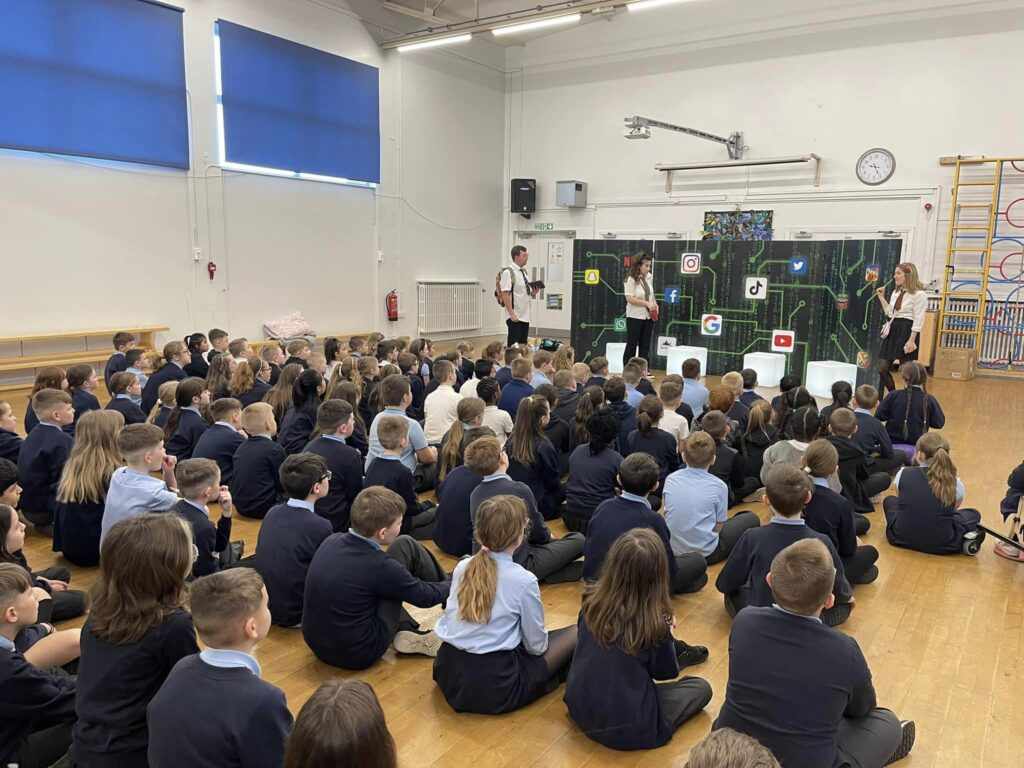
• Online safety is taught progressively to ensure pupils remain safe, respectful and responsible online.
• Pupils are encouraged to problem solve, debug and think computationally, developing resilience and perseverance.
• Technology is used to strengthen home-school links and celebrate learning.
• A broad range of devices, software and digital experiences ensure all pupils can access enriching opportunities.
• Meaningful links are made to future careers and the role technology plays in modern society.
• Learning is adapted to ensure all pupils, including disadvantaged pupils and those with additional needs, can access the curriculum.
• Knowledge and skills are revisited and built upon progressively throughout the school.
IMPACT:
The successful approach to Computing results in a fun, engaging and high-quality curriculum that develops confident, capable and responsible users of technology.
Pupils develop confidence in using technology safely, responsibly and effectively. They communicate using appropriate technical vocabulary, demonstrate resilience when solving problems and apply computational thinking across a range of contexts.
Children, including disadvantaged pupils, access a rich and ambitious Computing curriculum that broadens their experiences, increases cultural capital and deepens their understanding of the digital world. Through strong home-school partnerships and high-quality teaching, pupils make sustained progress from their starting points and are equipped with the knowledge, skills and attitudes required for lifelong learning.
Children at St Stephen’s Catholic Primary School overwhelmingly enjoy Computing and this results in motivated learners who are prepared for the demands of an increasingly digital society and who embody our mission to ‘Love like Jesus, Learn like Jesus and Live like Jesus.’

Useful Links to the Computing Curriculum:






Computing and E-Safety